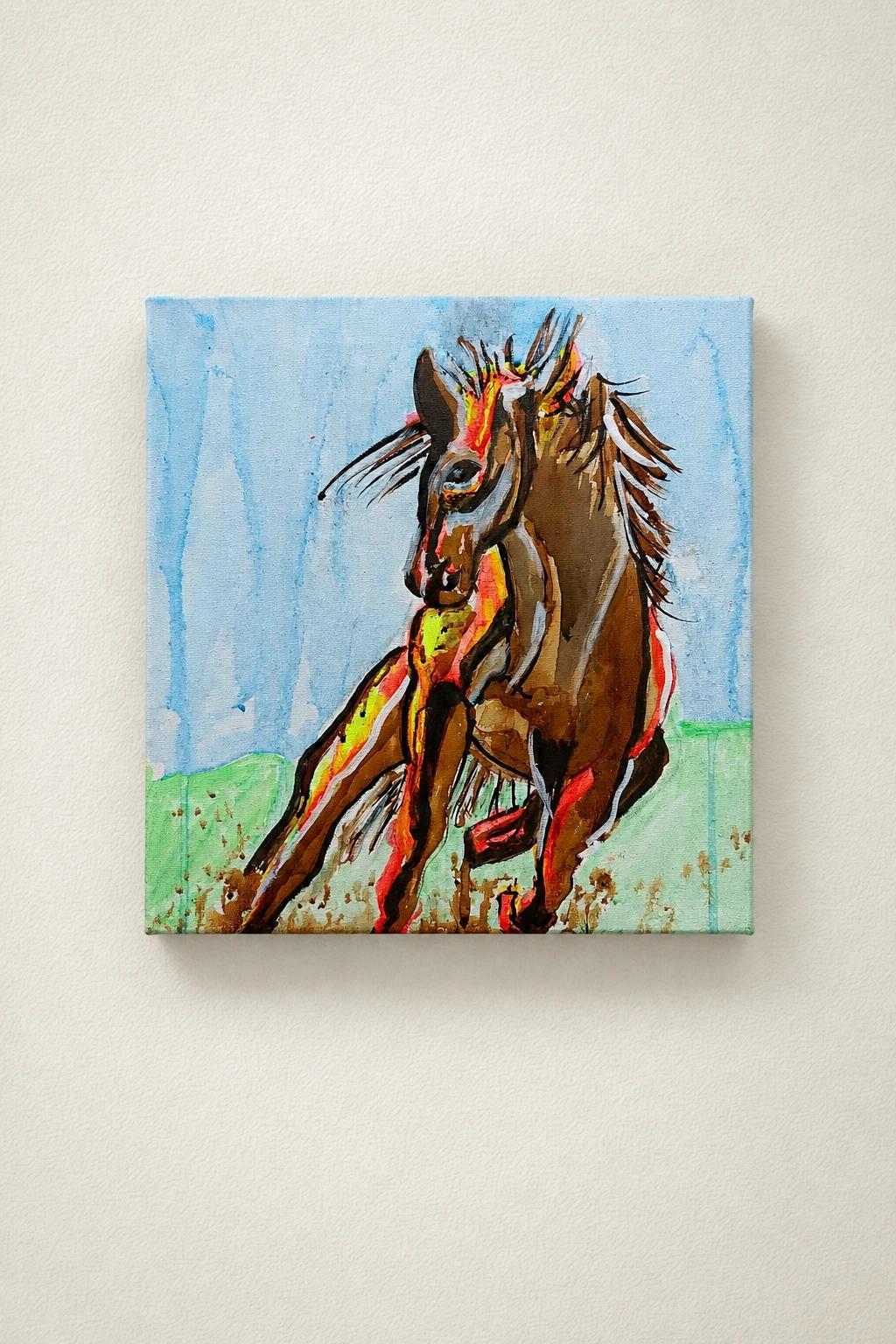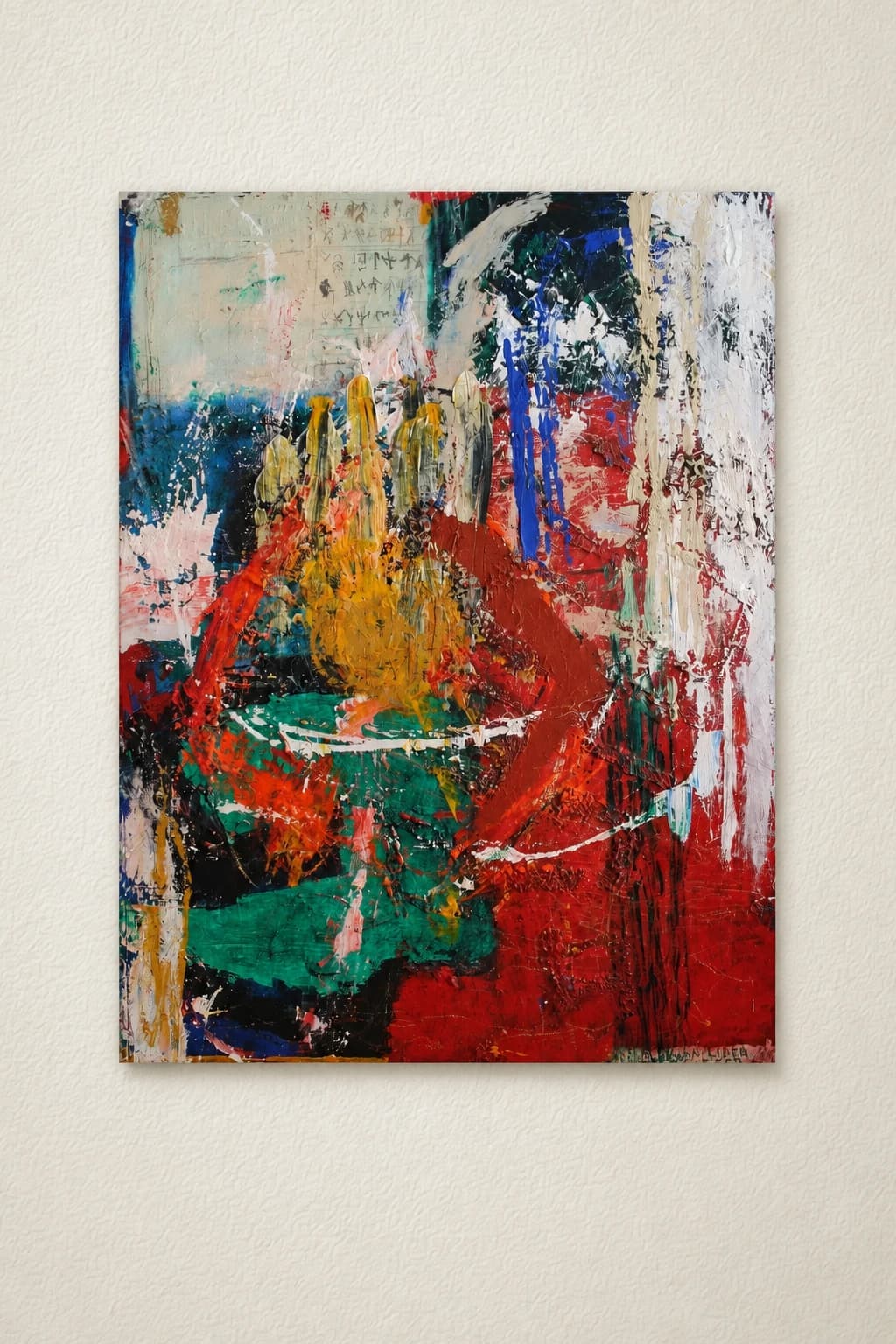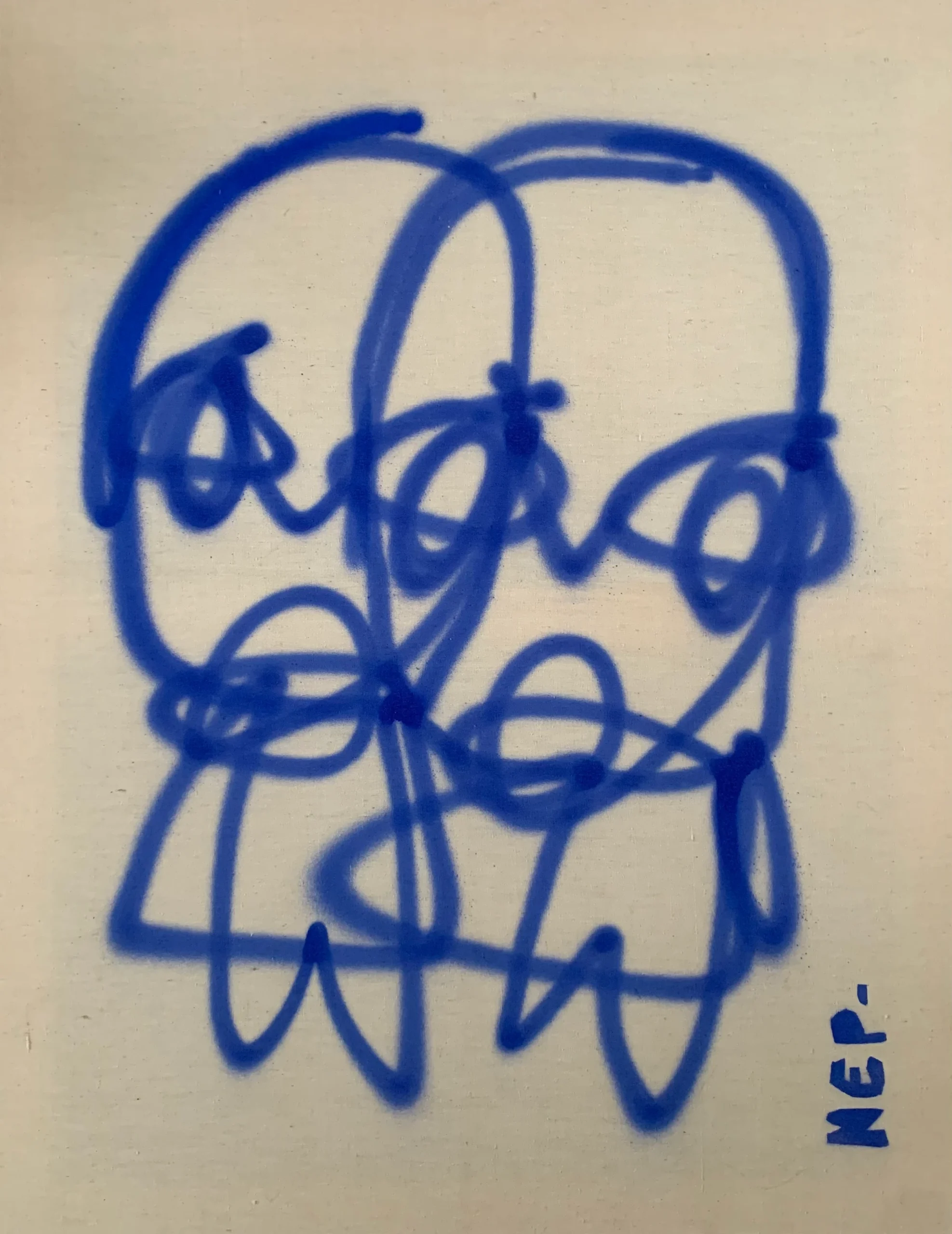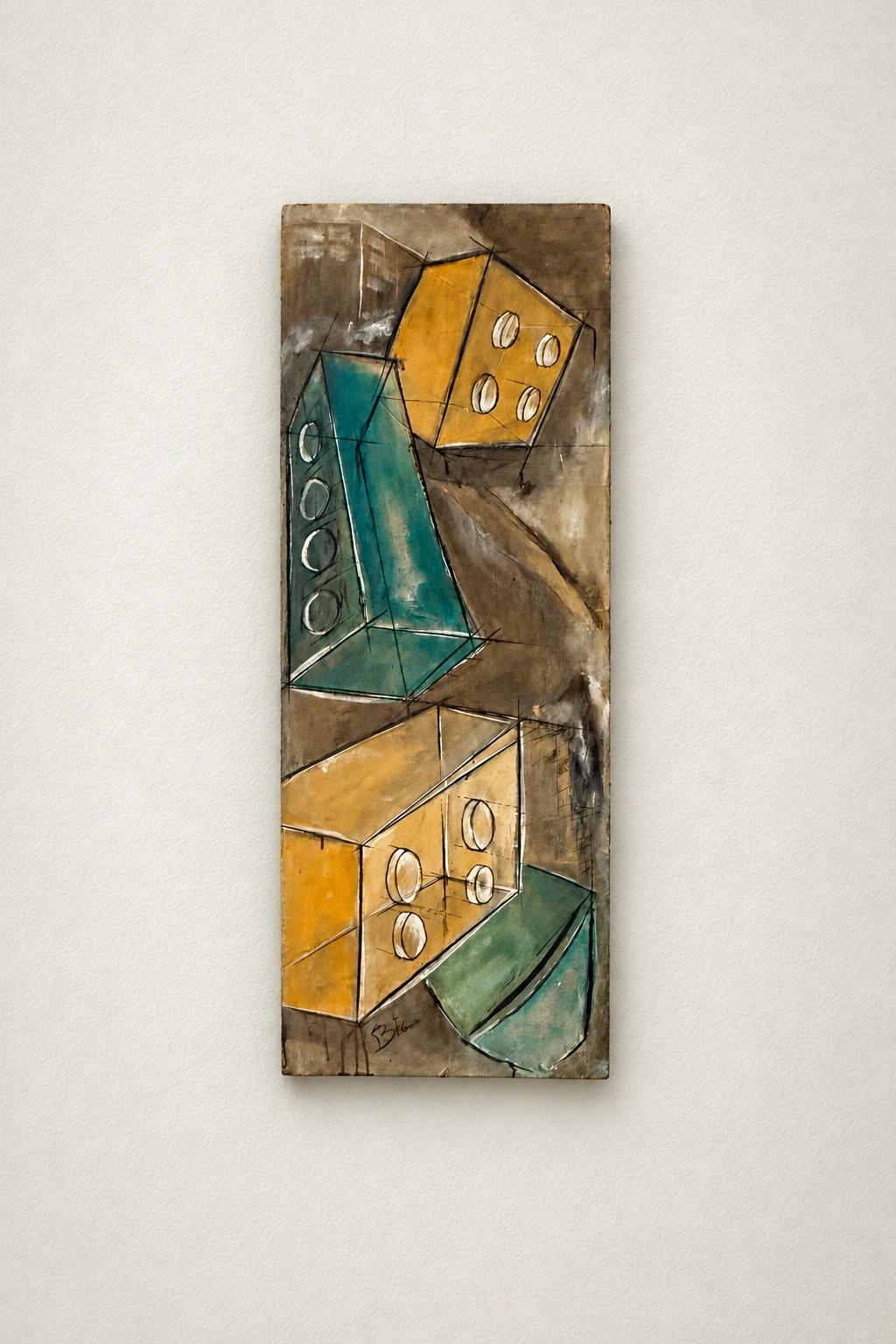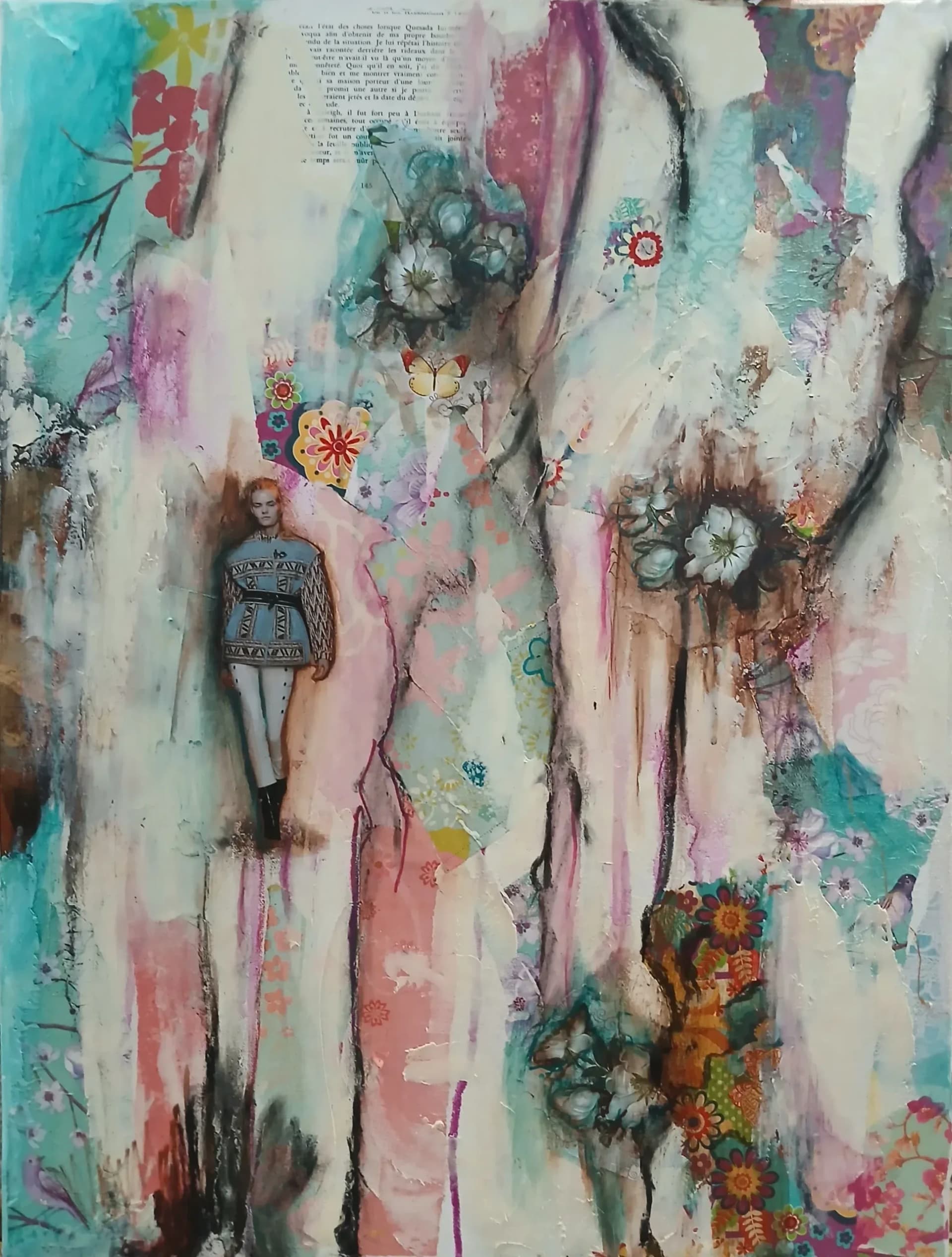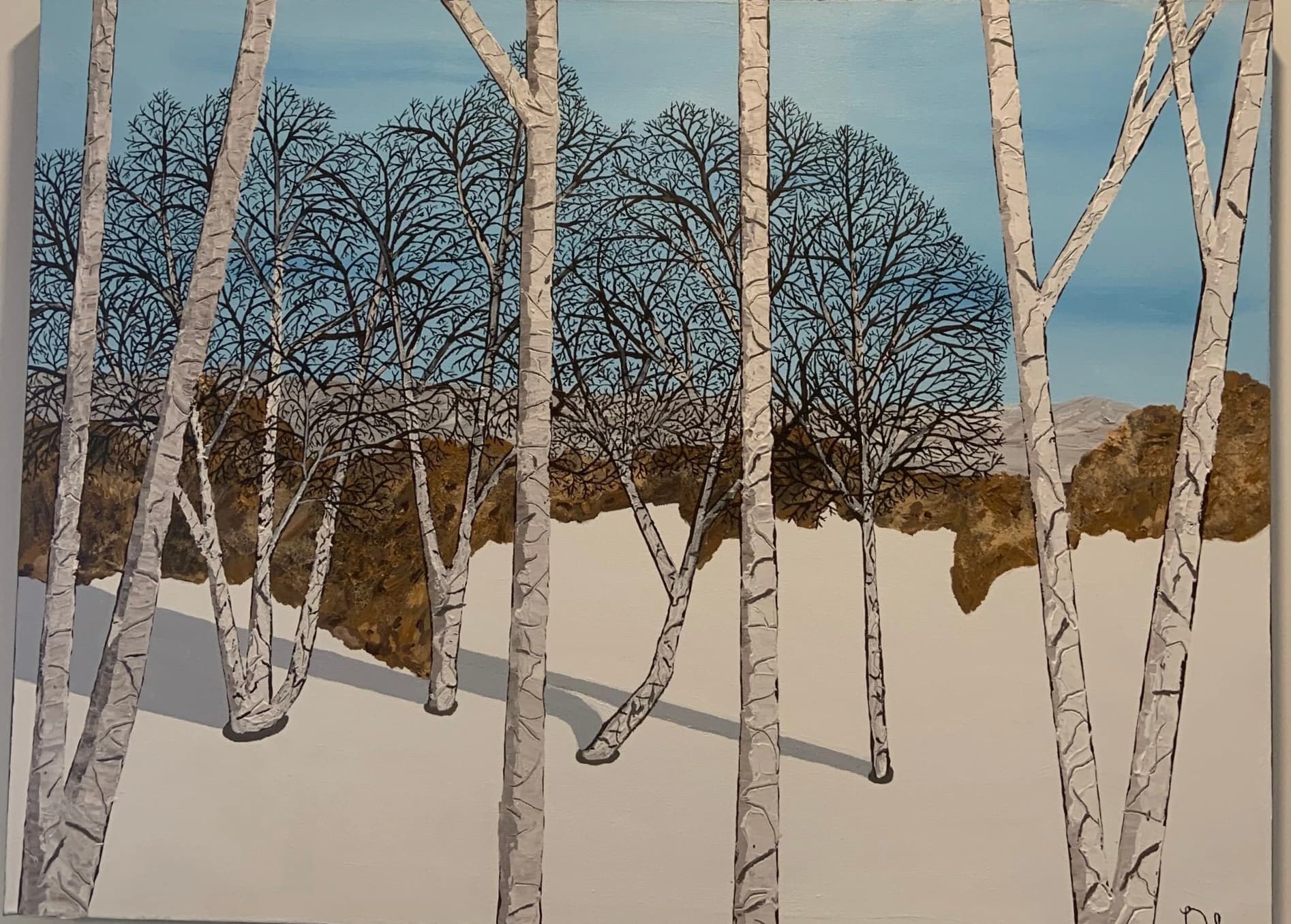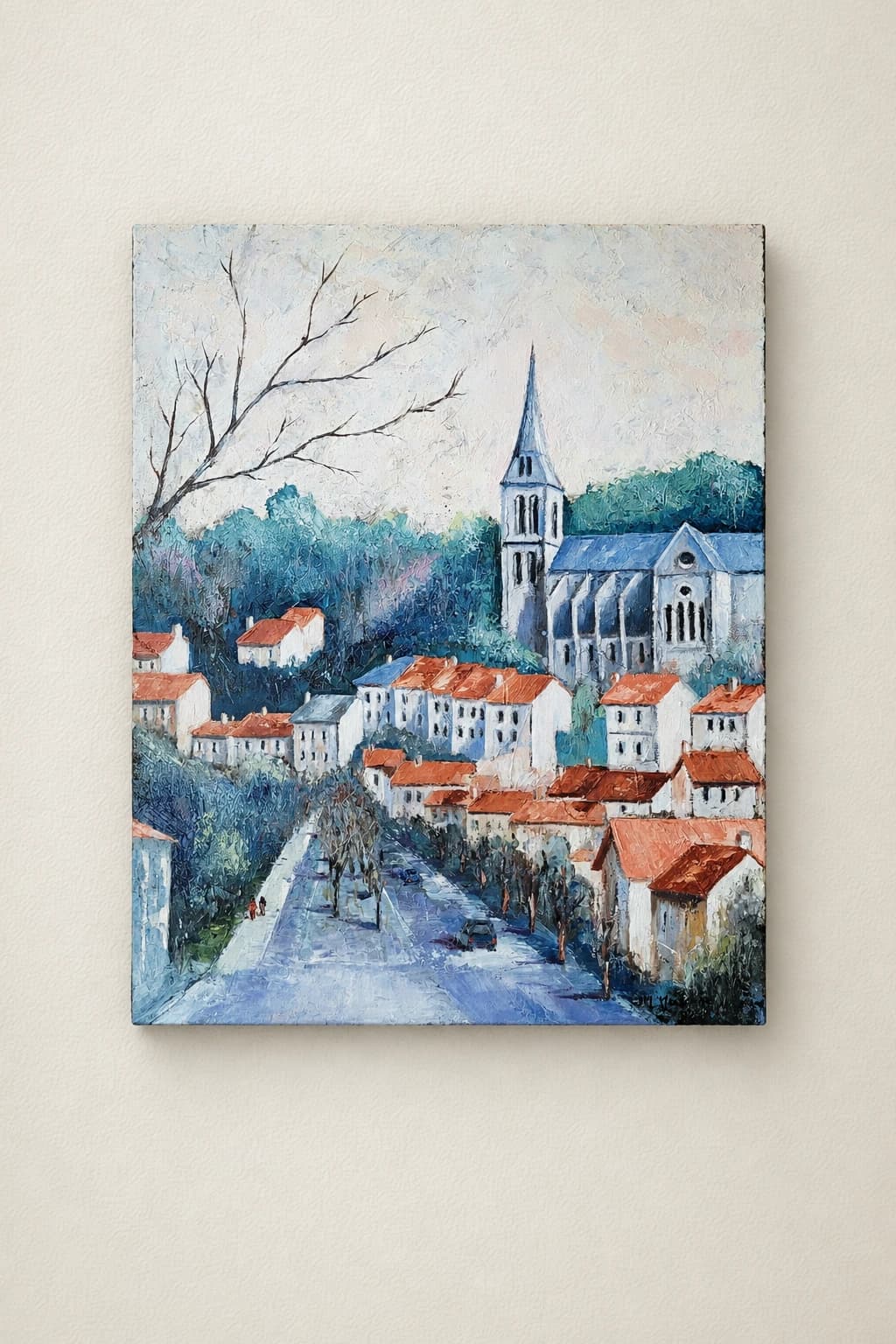
Neither is wrong to buy. The problem starts when a print is sold at the price of an original, or when the listing is vague on purpose. Here is how to check a work yourself, what the words on the label mean, and why the price gap is so wide.
Look at the surface: relief and brushstrokes
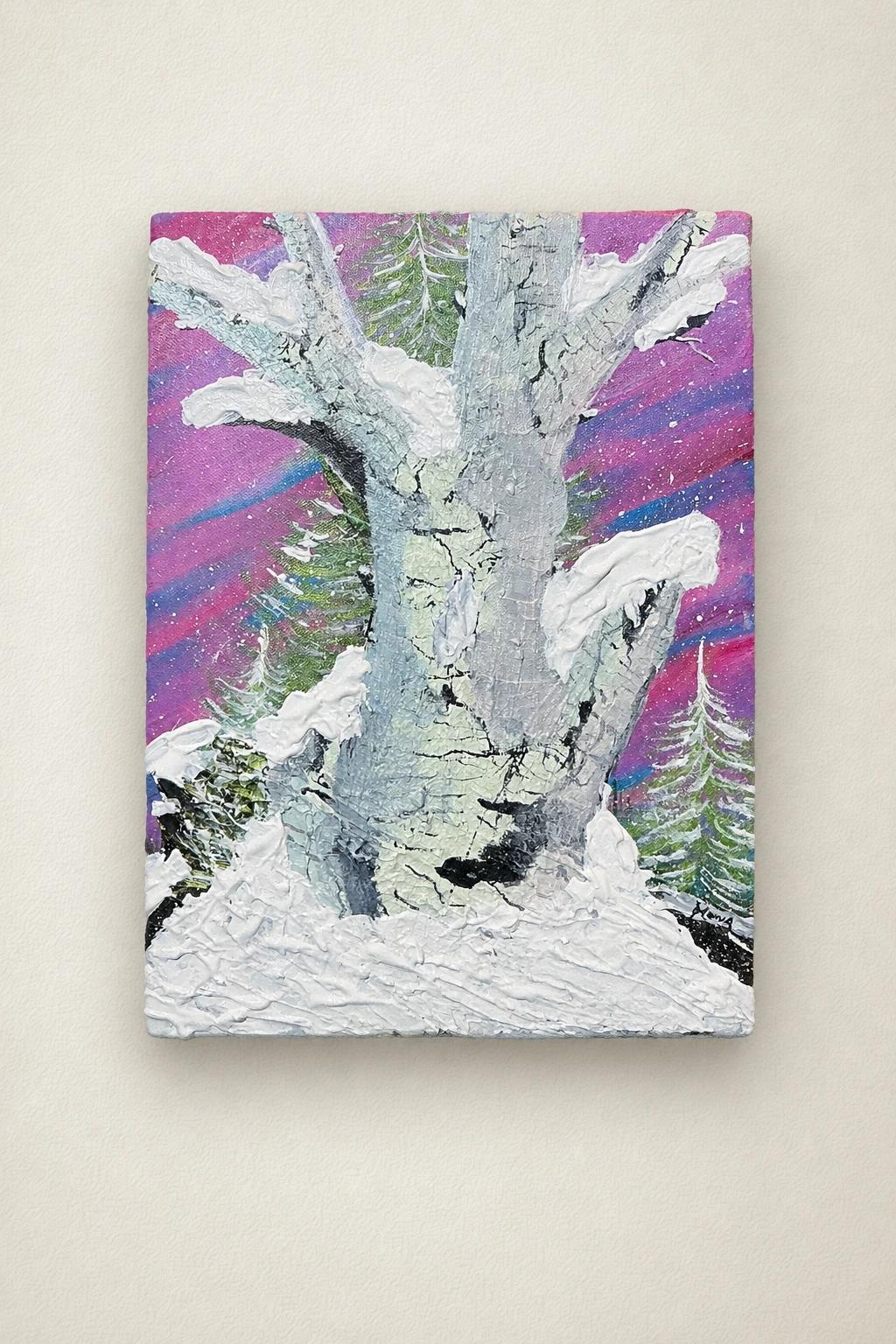
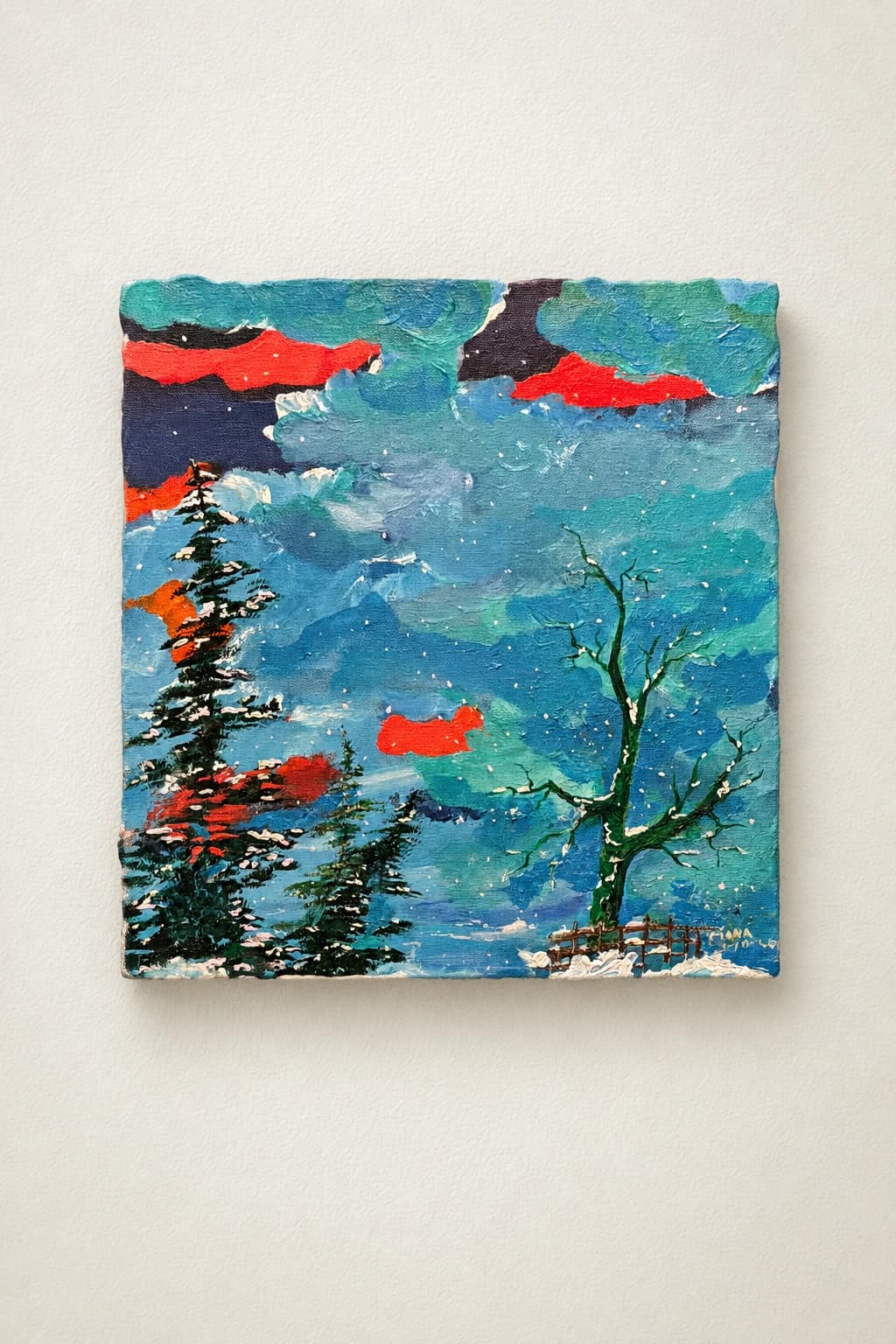
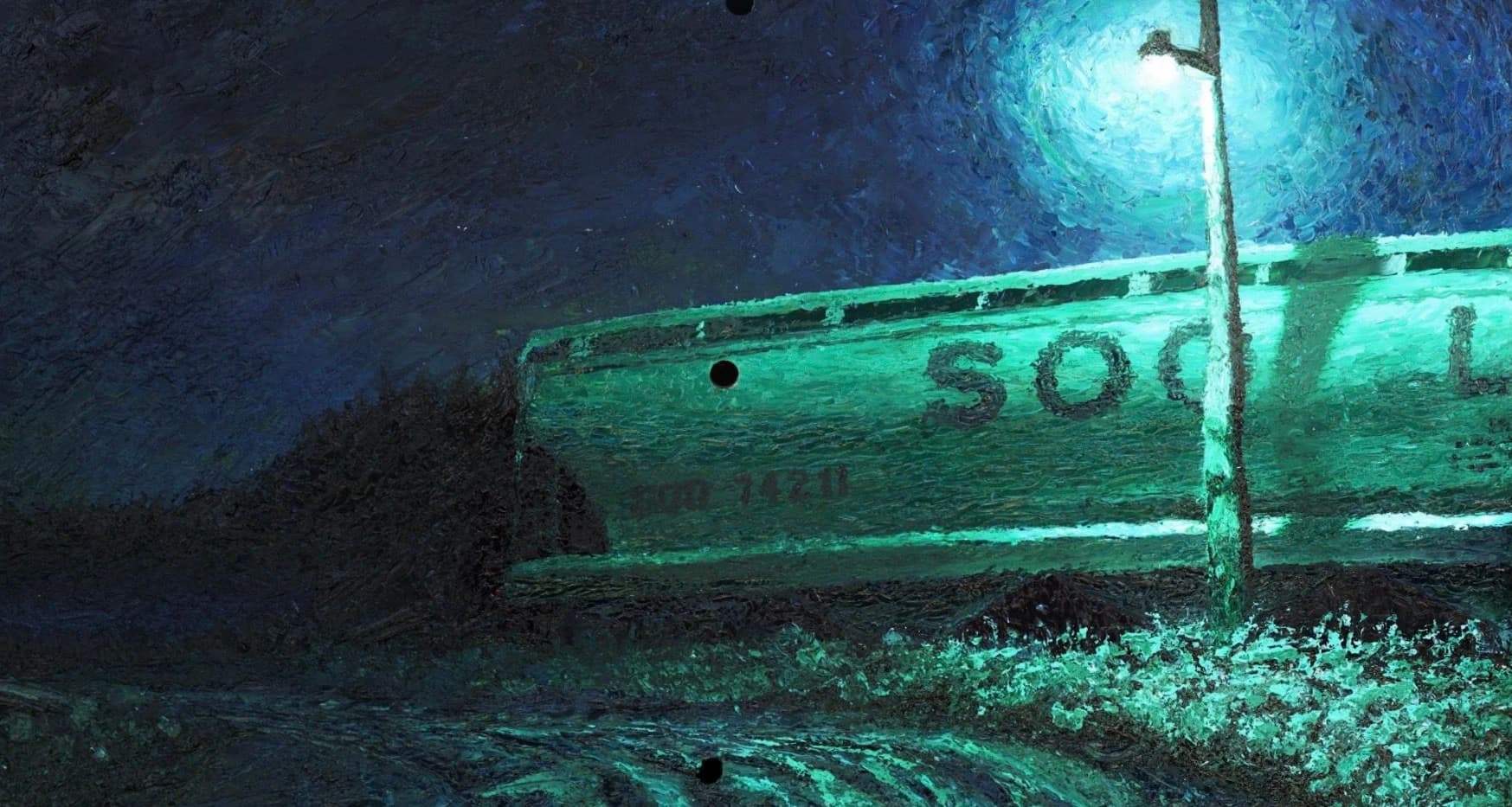
Hold a phone flashlight or a lamp low and to the side of the canvas, almost parallel to it. On an original acrylic or oil painting, the paint has a real thickness. Ridges from the brush or the palette knife cast small shadows, and the shine changes from one area to the next because some colours were laid thicker than others.
A print is flat. The texture you see is the weave of the canvas or the grain of the paper, and it is the same everywhere. With a magnifying glass or your phone camera zoomed in, many prints show tiny dots of colour or a fine, even spray, where a painting shows continuous strokes, stray brush hairs and places where one colour sits on top of another.
One trap: some reproductions get a coat of clear gel brushed on top to fake relief. Look at whether the raised strokes follow the colours underneath. On a painting they do. On a fake, the gloss strokes often cross the edges of shapes without any reason.
Check the edges, the back and the signature
Turn the canvas around. On a painting, the sides often show drips, overlaps or brush marks where the artist painted the edge by hand, or a strip of bare canvas where they stopped. On a printed canvas, the image usually wraps around the sides in a perfectly clean way, sometimes with a mirrored or blurred band, and the back of the fabric is plain white with no paint coming through.
Then look at the signature. A painted signature sits on top of the paint and has its own relief. A printed signature is part of the image: zoom in and it breaks into the same dots as everything around it. On works on paper, a signature in pencil in the bottom margin is the usual mark of a print the artist has checked and approved, which is a good thing, but it still tells you the work is a print.
Giclée, canvas print, hand-embellished: what the labels mean
Giclée is a fine-art inkjet print. The word was coined around 1991 by printmaker Jack Duganne, from the French verb gicler, to squirt. A good giclée uses pigment inks on archival paper or canvas and can last a long time, but it is still a print. The word on its own says nothing about how many copies exist.
A canvas print or canvas reproduction is an image printed onto canvas and stretched on a frame like a painting. A hand-embellished print is a print where someone added a few strokes of real paint on top, often clear gel or highlights. That paint is real, so the relief test can fool you in spots, but the underlying image is printed and the piece is usually made in series.
Limited editions: numbered and signed
A limited edition is a print run with a fixed number of copies, decided before printing. Each copy is numbered as a fraction: 14/100 means the fourteenth print of a run of 100. Most are signed by hand by the artist, usually in pencil. Copies marked AP (artist's proof) are extra prints kept for the artist, outside the numbered run. An open edition has no limit and no numbers.
A small, signed, numbered edition is a fair way to own the work of an artist you like at a lower price. Just read it for what it is: a numbered print, not an original. If a seller calls an edition "original art" without saying "print" anywhere, ask.
Certificates and the questions to ask a seller
A certificate of authenticity is useful when it is specific. It should name the artist, the title, the year, the exact medium (acrylic on canvas, giclée on cotton paper), the dimensions, and for an edition, the number of the copy and the size of the run. A certificate that only says "authentic artwork" proves very little.
Before you pay, ask in writing: Is this a one-of-a-kind painting or a print? What is the medium and the support? Has the image been sold as prints too? Who signed it, and how? Can I see a close-up photo of the surface in side light? A gallery or an artist selling originals answers these in a few minutes. Hesitation on the first question is your answer.
Why an original costs more, and how much more
An original is the only copy. Days or weeks of the artist's work, plus paint, canvas and stretcher, go into one object, and the price has to cover all of it. A print spreads the cost of one image across dozens or hundreds of copies, so each one can sell for a fraction. That is why a decorative canvas print from a big store can cost a few dozen dollars while an original painting of the same size from a living artist often starts in the low hundreds.
At L'Original, a non-profit gallery founded in Montréal in 2017, the artists set their own prices with a floor of $1 per square inch. A 12 x 16 in (30 x 40 cm) canvas is 192 square inches, so it cannot be listed below about $192. Signed originals start around CA$125, each comes with a certificate of authenticity, and the price shown already includes the average shipping cost. The gallery also publishes L'Original Édition, numbered prints signed by the artist, listed as prints.