
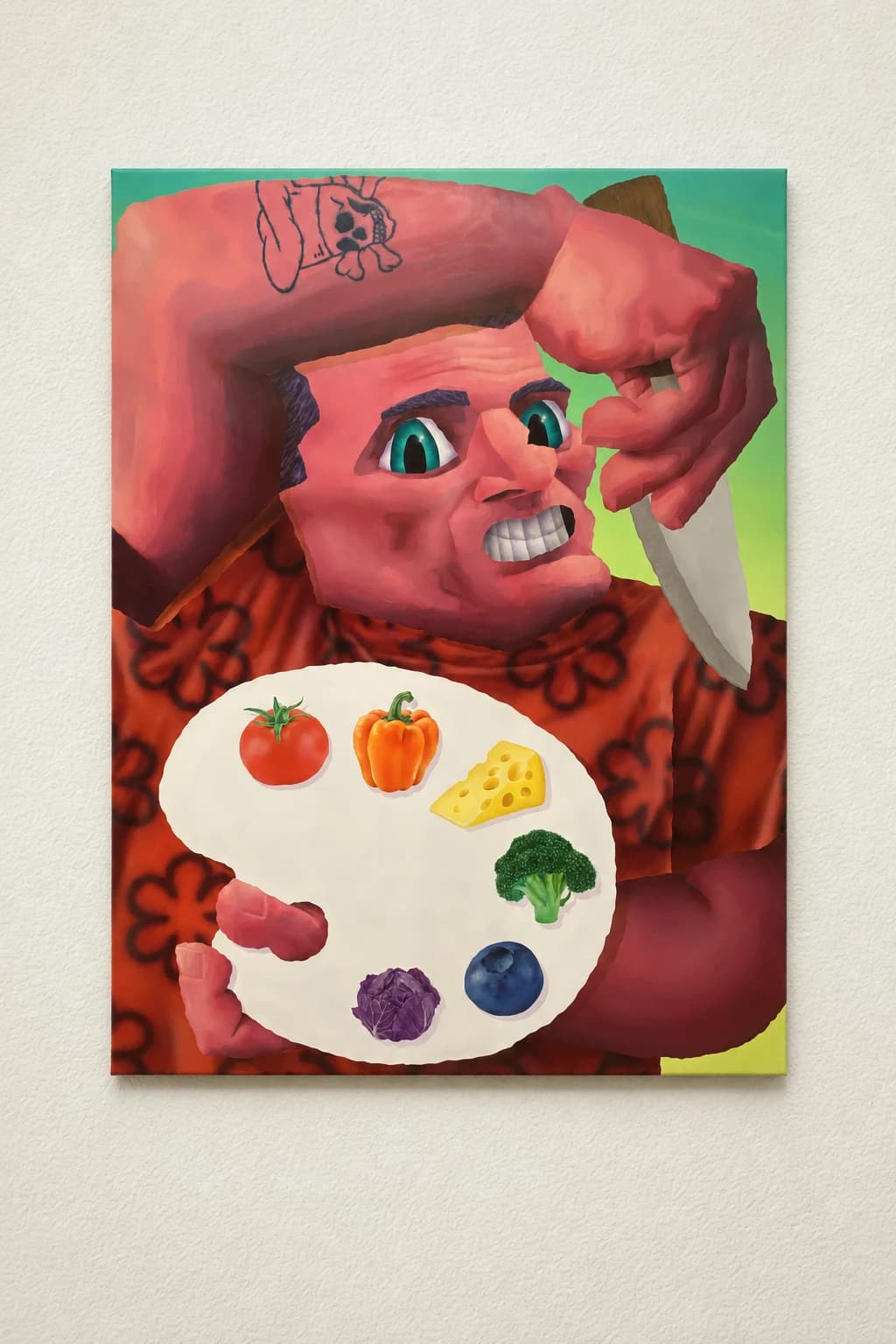
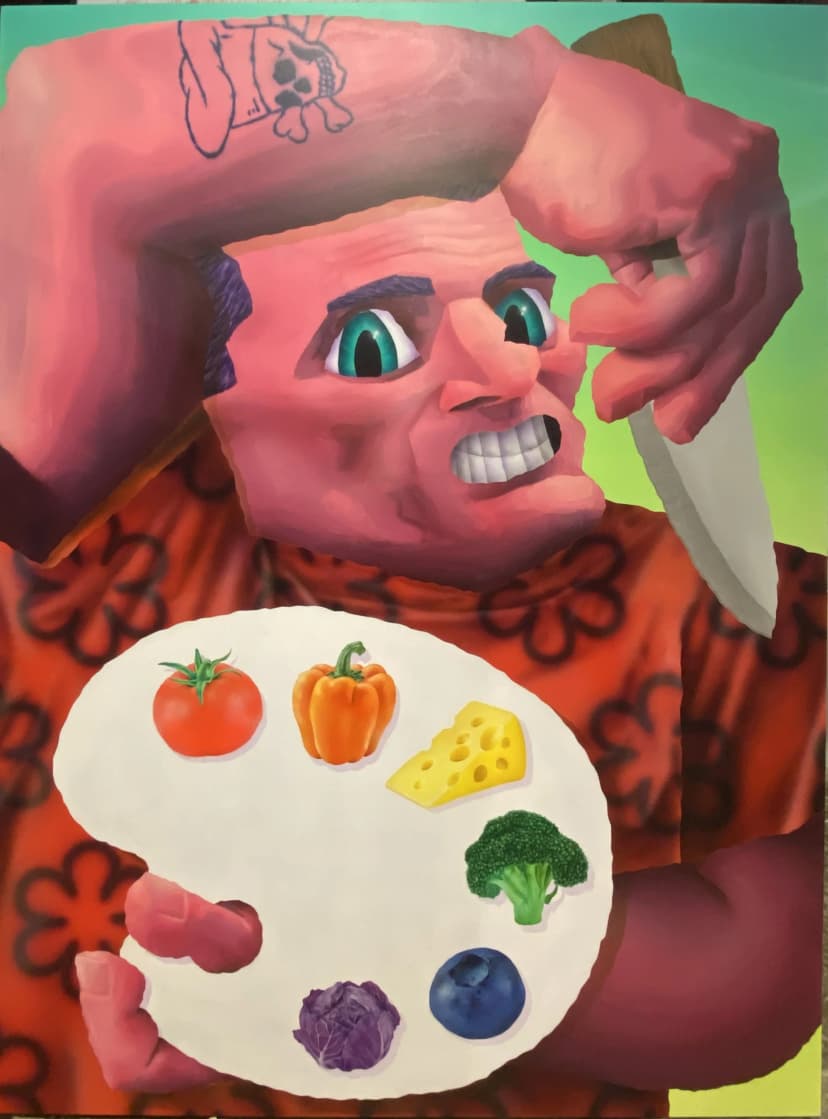
Works available1
Vincent Arnold

montreal, Canada
•
1995
Vincent Arnold flattens reality to rebuild it. In his murals across Villeray, conventional depth and perspective give way to flat, structured compositions where color alone creates space. The result is a graphic universe that is instantly recognizable — both distinctly contemporary and curiously untethered to any specific era. His work is defined by an approach in which depth and conventional perspective are abolished in favor of flat, structured composition. Bright colors, smooth gradients, and unusual cast shadows subvert traditional logics of volume. Active since around 2005, Vincent Arno...
Available for custom requests
Canvas
Starting from $6720
Murals
Starting from $67200
“Artist represented by L'Original.”
Artworks from this artist
Custom artwork
Flip the card
Your piece does not exist yet.
A no-obligation conversation.
Choose the format and Vincent Arnold will take care of the rest. You pay nothing before approving the quote.
from $340.00· canvas
1 to 3 weeks
Indicative range, confirmed in the free quote.
FreeNo obligationQuote in 48hZoom 20 min
How it works
Describe your vision
Mood, inspiration and context.
About 2 min · free
Quote + free Zoom
A clear price within 48 hours.
No obligation
Your artwork is delivered
You follow its progress.
1 to 4 weeks
Not ready today?
Emily will contact you at the right time, with no obligation.
Technical Specifications and Visuals
- Detailed technical data at the top of each product page
- Precise measurements: height, width, and frame depth
- Estimated weight indicated to help plan installation
- High-definition photography to faithfully reproduce textures and pigments
- Minor variations may occur depending on screen calibration
- Additional visuals available upon request
- Additional visuals available upon simple request
- Zoomed views of textures and paint reliefs
- Photos from different lighting angles or real-life settings
Installation
- Canvases are mostly ready to hang (tension keys and clean edges)
- Specific framing is explicitly mentioned if included by the artist
- Custom framing recommendations available upon request
- Keep in a room with stable humidity levels
- Avoid extreme temperature variations
- Protect from prolonged direct sunlight exposure
- Free virtual mockup tool available upon request
- Upload a photo of your room (living room, bedroom, office)
- To-scale visualization of the artwork on your wall
- Ideal width: between 2/3 and 3/4 of the furniture below
- Creates visual balance with sofa, bed, or sideboard
- Prevents the artwork from overpowering the space
Meetings and Custom Projects
- Virtual meetings or exchanges can be arranged depending on availability
- Opportunity to discuss the artist's creative approach
- Support from the gallery team to facilitate contact
- Fair and transparent pricing based on a detailed initial quote
- Calculated based on size, medium, and project complexity
- Competitive pricing tailored to your budget with no hidden fees
- No exact copies to preserve the uniqueness of each artwork
- Custom commissions inspired by past works are possible
- Artist reinterpretation with adapted format or color palette